
More Than a Board: How D-Robotics' RDK X5 Platform Is Powering the Future of Personal Robotics
When people think about robotics, they often picture advanced walking machines or self-driving warehouse robots. But every robot arm, talking pet bot, or sorting system needs one key thing: a computer. And it needs more than just power. It needs smart intelligence that is easy to use, easy to program, and made for the real world. This is the idea behind the D-Robotics' RDK X5. It is a small AI board and development platform. Creators, teachers, and professional developers are all starting to us
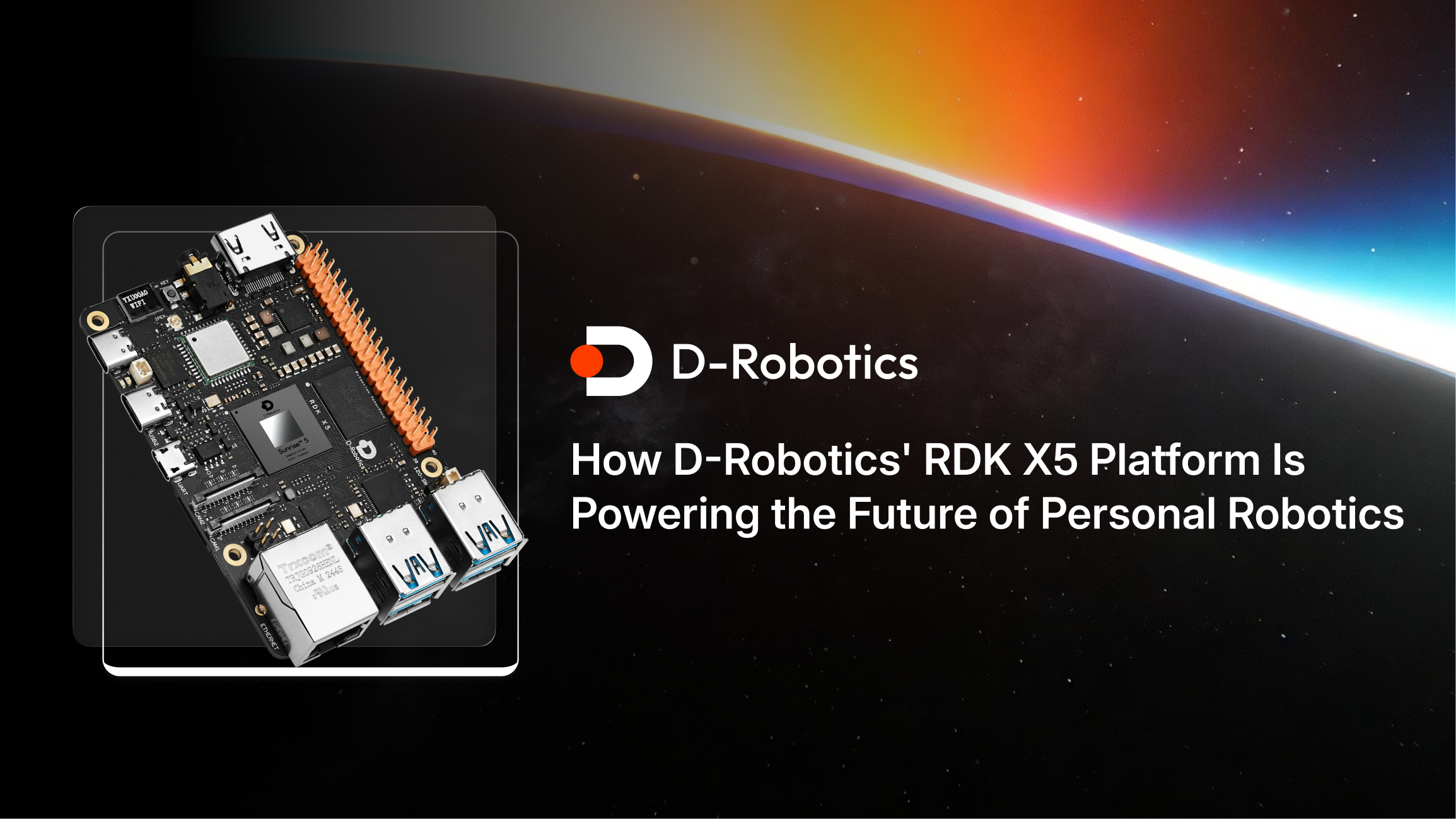
When people think about robotics, they often picture advanced walking machines or self-driving warehouse robots. But every robot arm, talking pet bot, or sorting system needs one key thing: a computer. And it needs more than just power. It needs smart intelligence that is easy to use, easy to program, and made for the real world.
This is the idea behind the D-Robotics' RDK X5. It is a small AI board and development platform. Creators, teachers, and professional developers are all starting to use it. In a online show hosted by Make Magazine, the RDK X5 was not just shown. It was demonstrated and celebrated by its community.
A Robotics Kit That’s More Than a Board
The RDK X5 is a single-board computer. But it is much more than that. The team at D-Robotics made it a complete Robotics Developer Kit. It is not just a processor. It is a full system for building robots that can see, think, and act.The main specs are strong:
- 8-core Cortex-A55 CPU @ 1.5GHz
- 10 TOPS AI BPU (Brain Processing Unit)
- YOLOv8n 640x640 benchmarked in RDK Model Zoo at 141.9 FPS with one BPU thread and 247.2 FPS with two BPU threads
- GPU: 32 GFLOPs for showing images
- Up to 8GB of RAM
- Four USB 3.0 ports, Gigabit Ethernet with PoE, Bluetooth 5.4, and HDMI output
- Dual MIPI-CSI camera interfaces and 40-pin GPIO
What really makes it different is how well it works with ROS 2. TogetheROS.Bot (TROS.b), D-Robotics’ ROS 2-based robotics software stack for RDK platforms, adds hardware-aware support for image processing, model inference, and real-time robot application development.
AI-Powered Demos That Actually Work
Specs are good, but demos are better. And the online show had great demos.From the start of the event, viewers saw live demonstrations of the RDK X5. It ran many AI tasks at the same time and did it easily. Some of the best parts were:
- Origin Man – Humanoid Robot with Skeleton Tracking
A robot copied human movements using pose estimation. It recognized 17 body points and 128 face points. All of this was processed on the board very quickly, with less than 50ms of delay.
- Gesture Recognition for Robot Control
The robot could start programmed actions using simple hand signs, like a thumbs up, a victory sign, or an okay sign. These actions included arm movements and animations.
- YOLOv8 Object Detection in Action
The RDK X5 found people, fruits, donuts, and even small pets using YOLOv8 models. The online show was limited to 30 FPS because of the stream, while official RDK Model Zoo benchmarks for YOLOv8n at 640x640 show 141.9 FPS with one BPU thread and 247.2 FPS with two BPU threads on RDK X5.
- Robot Arm Sorting Demo
The Myobot 280, a moving robotic arm, identified objects on a table. It then sorted them into groups using its vision. This demo showed how the RDK X5 can be used to make new robots for shipping, stores, and factories.
- Voice Activation via Onboard Audio
The demo used a compact model to listen for wake words like "Hey Snips" and provide fast offline audio responses. Voice input and output require an external microphone, headset, or compatible audio device; the 3.5mm audio jack is an audio interface, not a complete built-in voice-input system.
What Sets the RDK X5 Apart?
Many AI boards have good specs. But the RDK X5 is special because it offers a complete system for developers. Here is what that includes:
- Pre-installed Ubuntu-based system
- ROS 2 and TogetheROS.Bot (TROS.b) ready to use
- Open-source code on GitHub
- Instructions in both English and Chinese
- NodeHub for sharing ROS nodes and using robotics applications
- Access to cloud-based agent/model capabilities used by MOSS Agent, currently based on MiniMax M3
- Community support on Discord and through a network of creators
The platform lets developers build multi-model AI pipelines, such as object detection, gesture recognition, and voice control. With its 10 TOPS BPU, RDK X5 can support low-latency multi-model pipelines depending on model size, input resolution, quantization, thread count, scheduling, and whether preprocessing or postprocessing is included.
Real Community, Real Impact
The event was more than a demo. It was a meeting for the RDK community. Developers like Michael from the UK (“Mike Likes Robots”) shared how they used the RDK X5 to build mobile robots that move based on hand signs. Technical leaders like Frank and Robin explained that the platform was made for both ROS experts and new learners.
The RDK ecosystem is supported by a large and growing developer community, with official documentation, GitHub resources, Discord support, and purchasing channels helping more developers get started. The lineup also includes the RDK S100 series, with 80 TOPS for RDK S100 and 128 TOPS for RDK S100P, showing how the platform is developing into a broader robotics ecosystem rather than a single board.
RDK X3 vs RDK X5: What’s New?
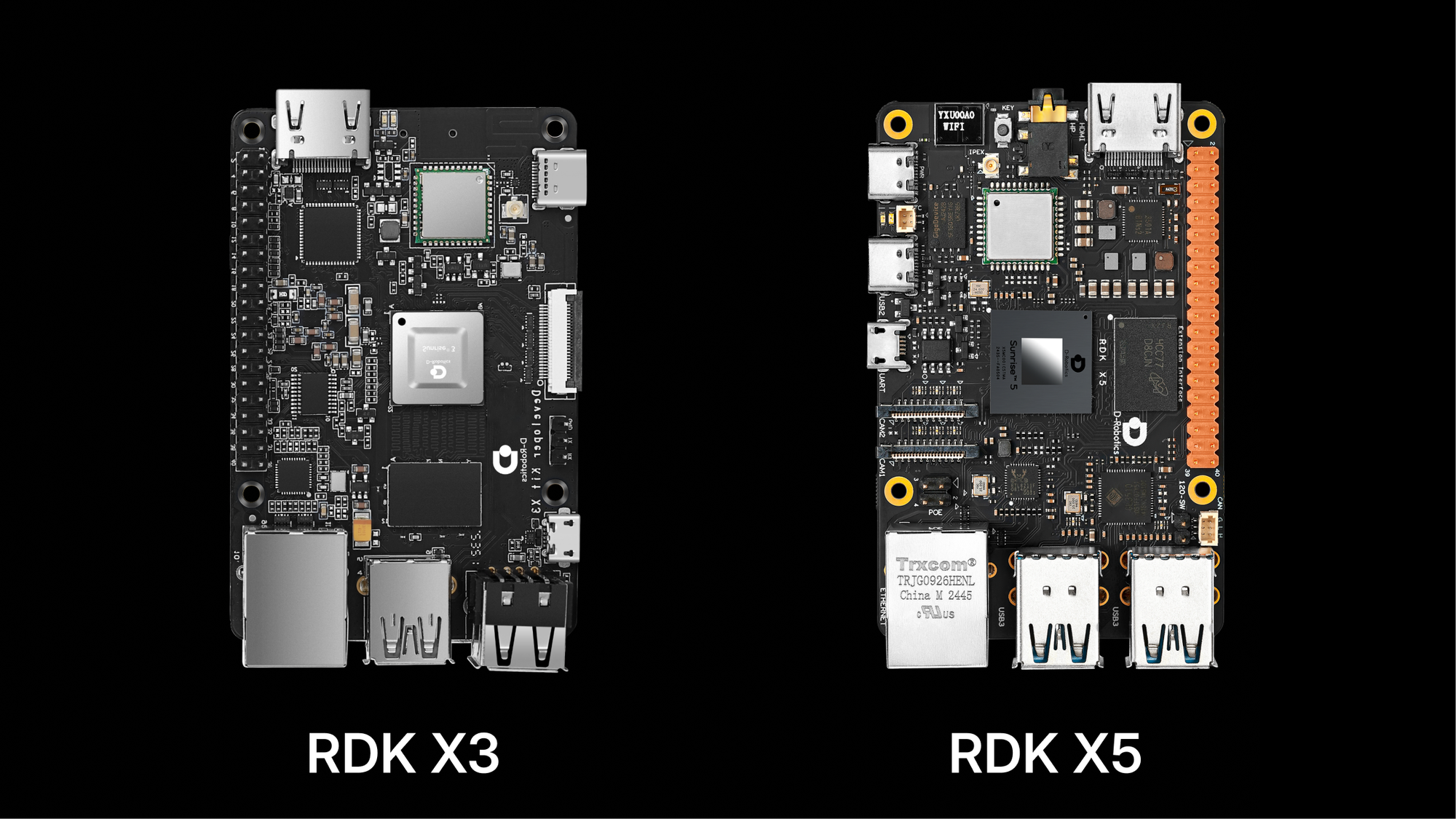
| Feature | RDK X3 | RDK X5 |
| CPU | 4-core Cortex-A53 | 8-core Cortex-A55 |
| AI Performance | 5 TOPS | 10 TOPS |
| RAM | Up to 4GB | Up to 8GB |
| Real-Time YOLOv8 | ~34 FPS | 220+ FPS |
| Voice Interface | Not available | 3.5mm audio + MDTC |
| ROS 2 Support | Basic | Optimized (T-ROS) |
For anyone who works on AI, gesture control, robot arms, or self-moving robots, the RDK X5 is a big improvement. It changes what is possible at this price.
More Advanced Development Kit
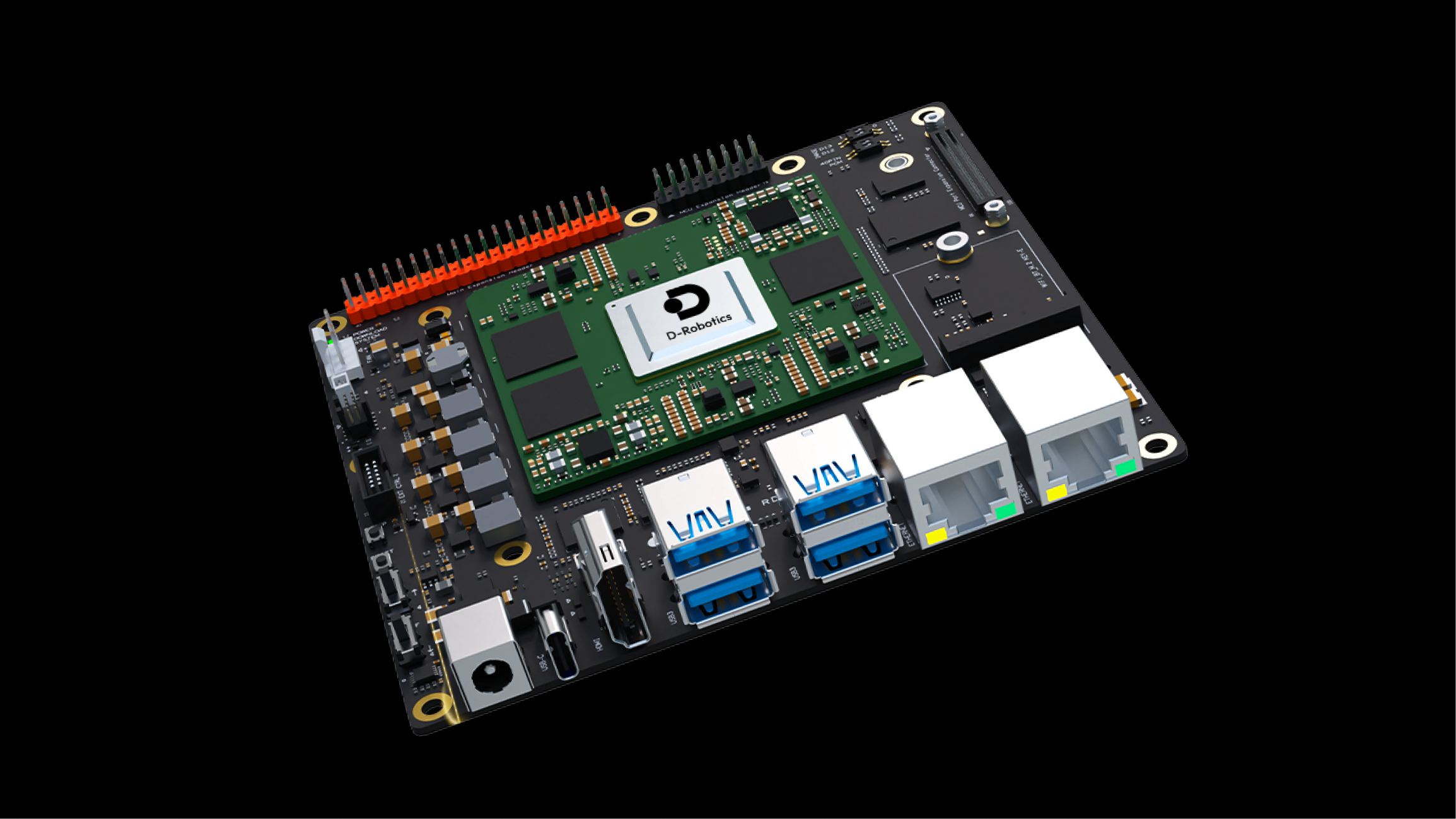
For developers who need more headroom, the RDK S100 series offers a more advanced development kit option with CPU + BPU + MCU heterogeneous computing and two performance tiers:
- RDK S100: 80 TOPS AI performance, 6x Arm Cortex-A78AE CPU @ 1.5GHz, and 12GB LPDDR5 memory
- RDK S100P: 128 TOPS AI performance, 6x Arm Cortex-A78AE CPU @ 2.0GHz, and 24GB LPDDR5 memory
- Both models include 4x Arm Cortex-R52+ MCU @ 1.2GHz, USB 3.0 x4, USB 2.0 Type-C for flash/debug, dual Gigabit Ethernet, and expansion headers for robotics development
Final Thoughts
The RDK X5 is making its own space as a complete, real-time robotics platform for AI developers. And it is doing this with a strong, worldwide community. It also has a clear focus on being easy to use, open, and helpful in the real world.If you build robots, teach AI, make vision systems, or just want to see what edge computing can do today, this is a board you should know about and use.